How Clogged Gutters Can Lead to Expensive Home Repairs in Lawrenceville, GA
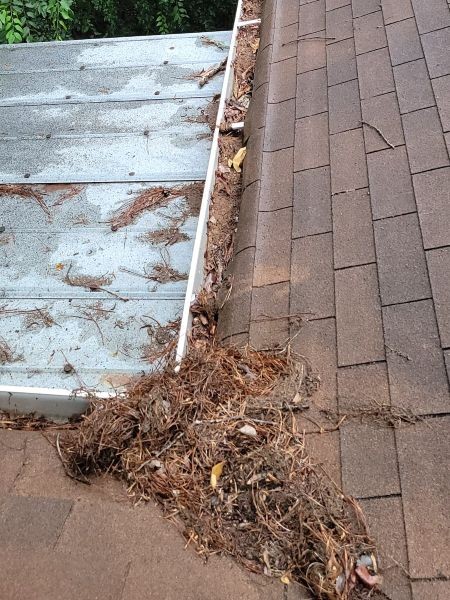
If you have clogged gutters in Lawrenceville, GA, your home is at risk every time it rains. Our warm, wet summers and frequent pop-up storms can fill gutters with leaves, pine needles, and roof grit in a hurry. When water can’t move, it looks for the fastest escape route, often into places you do not want it. That is why timely gutter cleaning is one of the smartest steps for long-term water damage prevention.
What Happens When Gutters Stop Moving Water
Gutters are meant to catch roof runoff and guide it safely away through downspouts. When they clog, water pools along the roof edge and overflows like a bathtub. It seeps behind the gutter, saturates wood trim, and spills down your siding. On the ground, the splash zone widens, washing out mulch and soaking the soil next to your foundation.
During a heavy Gwinnett County thunderstorm, that overflow can be intense. A single downpour may dump more than your clogged system can handle, which multiplies the damage in minutes. **Do not ignore overflowing gutters after a storm.** Small problems turn big quickly.
Roof Leaks Start Small Then Spread
When water backs up over shingle edges, it can creep under the roofing and wet the underlayment. That moisture weakens nails and rots the roof deck along the eaves. You might first notice stained ceiling paint near exterior walls or a musty odor in an upstairs room. Left alone, wet sheathing can sag, and leaks can travel along rafters, showing up far from the source.
Clogged gutters in winter can make the problem worse. Cold nights around January may freeze trapped water. Ice expands, lifts shingle edges, and opens pathways for more water the next day. Even in Georgia, a few freeze-thaw cycles are enough to start costly roof damage.
Fascia Boards and Soffits Take the First Hit
The fascia is the board behind your gutters, and the soffit is the vented panel underneath your overhangs. Both are vulnerable when water sits. Rot begins at the nail line where the back of the gutter touches the wood. Paint bubbles, boards soften, and wildlife can exploit gaps to reach your attic. **Rot spreads fast once it reaches the fascia and soffit.** Replacing sections of trim and repainting an entire eave can add up, especially on two-story homes common around Lawrenceville.
Siding Stains, Mold, and Hidden Decay
Overflowing gutters streak dirt and shingle oils down your siding. On fiber cement or vinyl, that means stains and algae. On wood siding, it invites decay. Water that slips behind trim can soak housewrap and sheathing. You may not see the damage until you notice soft spots around windows or peeling paint that returns soon after repainting. Keeping runoff inside the gutters reduces these risks and supports your home’s exterior warranty conditions.
Landscape Erosion and Washed-Out Beds
Sod and mulch do not stand a chance under a waterfall. Repeated overflow scours planting beds, exposes roots, and carries soil into walkways and storm drains. Eroded topsoil is expensive to replace and can lead to uneven settling near porches and patios. Homeowners along the Grayson Highway corridor and in tree-lined neighborhoods across Lawrenceville often see the worst of this after fall leaf drop and early spring pollen season when debris is thick.
Local tip: Fast-moving summer storms in Gwinnett County often arrive with little warning. A single cell can overwhelm debris-clogged downspouts in minutes. Regular cleanings before peak storm months help protect roof edges and foundations when the rain hits hard.
Foundation Problems You Cannot See Right Away
The biggest risk from clogged gutters is what you cannot see. Overflow dumps water right next to your foundation where Georgia’s red clay holds moisture. **Standing water at the base of your home is a red flag.** As the soil swells, it pushes against basement or crawlspace walls. Over time, this hydrostatic pressure finds weak points, and tiny cracks widen. Damp odors, peeling paint on foundation walls, or a musty crawlspace can all trace back to rainwater that never left the roofline correctly.
Even slab-on-grade homes around Lawrenceville are not immune. Water that lingers beside your slab can work its way under expansion joints and encourage settlement. **Clay soil can push water against your foundation for hours after rain.** Good drainage begins with gutters that flow freely.
Why Lawrenceville Homes Are at Extra Risk
Our area has the perfect recipe for gutter clogs: abundant trees, windy thunderstorms, and long growing seasons. Live oaks drop leaves in fall, pines shed needles year-round, and spring pollen forms a sticky mat that traps roof grit. Add in the high humidity and you have ideal conditions for algae and mildew. Homes near parks, greenways, or older tree canopies often need more frequent service, while those in newer subdivisions may get by with fewer visits. The right schedule varies by home size, roof pitch, tree cover, and season.
Early Warning Signs To Watch For
- Water pouring over the gutter edge during rain
- Black streaks or algae trails on siding or brick near downspouts
- Soft or peeling paint along fascia boards and soffits
- Mud lines and washed-out mulch below roof valleys
- Musty smells in the attic, crawlspace, or near exterior walls
If any of these sound familiar, address the cause before it grows. For a clear path forward, many homeowners start by reviewing solutions for clogged gutters in Lawrenceville, GA and how preventive care protects the entire structure. This simple step supports water damage prevention across your roof, walls, and foundation.
How Professional Service Protects Your Home
A trained gutter cleaning company does more than remove leaves. Technicians clear and flush each run, check joints and end caps, and make sure downspouts discharge far enough from your foundation. They look for sagging sections, missing hangers, and signs of fascia rot before it spreads. They also document what they find so you can plan next steps with confidence.
What a Good Visit Includes
- Safe removal of debris from gutters and downspouts
- Water testing to confirm flow at every outlet
- Simple tightening and minor adjustments where needed
- Notes and photos of any roofline or trim concerns
Every home is different, so visit frequency varies. Homes under heavy tree cover often need multiple cleanings each year, with added attention before hurricane season and after fall leaf drop. Homes with leaf guards still benefit from inspections because fine debris and roof grit can collect over time.
Real-World Scenarios Around Lawrenceville
After a line of summer storms, a two-story home near downtown may see gutters fill with twigs and shingle granules. Overflow soaks the soffits, and a week later the upstairs hallway ceiling shows a faint yellow ring. Another home closer to the county line may notice standing water near the back patio each time it rains. In both cases, the root problem is the same: water is not being carried away fast enough, and the house pays the price. Quick maintenance and proper downspout flow stop the damage before it accelerates.
The Hidden Costs of Waiting
Putting off service does not save money. Moisture invites carpenter ants and termites. Damp insulation near roof edges loses effectiveness. Siding repairs and repainting can cost far more than a simple maintenance plan. Most costly of all is foundation work prompted by long-term saturation. Stopping the water at the top of the wall is the simplest way to avoid these headaches.
Set a Simple Maintenance Rhythm
You do not need a complicated plan to protect your home. Mark the calendar for late spring and late fall, then add an extra check after major storms if your lot has heavy tree cover. Keep an eye on landscaping, splash blocks, and drainage paths so water never lingers near your slab or crawlspace. When in doubt, schedule a visit so a pro can verify that everything is flowing as designed.
Why Choose Manny's Gutter Service, LLC for Gutter Care
Manny's Gutter Service, LLC focuses on protecting the whole home. Our team understands how neglected gutters can lead to roof leaks, fascia rot, siding damage, landscape erosion, and foundation problems. We document what we find, explain your options in plain language, and treat your property with care from the first ladder placement to the final cleanup. If you prefer a plan you do not have to think about, ask about seasonal service that fits your tree cover and roof design.
Take Action Before the Next Storm
The best time to stop water damage is before dark clouds gather. Schedule professional help now so runoff moves where it should and your trim, siding, and foundation stay dry. To get started, explore our approach to effective gutter cleaning, then call 404-786-6014 to book your visit with Manny's Gutter Service, LLC. We are ready to help you secure your home for the seasons ahead and give you peace of mind when the rain arrives.
Don’t Leave Your Gutter Clogged.
Contact Us About Our Gutter Cleaning Services in Lawrenceville Today!